
When dance figurines that have slept for thousands of years awaken through algorithms,
when musical and dance scenes depicted in ancient murals are revived through digital technology,
this semester, the “A Brief History of Chinese and Foreign Dance” course,
in collaboration with the Dance Museum,
launched an innovative practice in the digital revitalization of dance-related cultural relics.
Using technology as their brush and history as their canvas, students applied artificial intelligence (AI) to transform static cultural relics into dynamic visual creations,
offering a contemporary interpretation of China’s dance heritage.
A Northern Qi dynasty dance figurine gracefully extends its sleeves; an Eastern Wei dynasty dance figurine dances alongside students in the classroom; Tang dynasty dance figurines gaze gently and smile gracefully amid a virtual lotus pond...These precious dance figurines housed in the Academy’s Dance Museum—some of whose original forms have been lost and others dispersed far from their homeland—have now been brought back to life through AI technology, revealing the timeless charm of Chinese dance in the digital world.
Designed for performance majors, the “A Brief History of Chinese and Foreign Dance” course transforms history into an immersive journey of exploring and preserving the cultural roots of Chinese dance. The instructor led students into the Dance Museum of Beijing Dance Academy (BDA), where they observed precious artifacts represented by 353 musical and dance figurines donated free of charge by Wang Qian, a master of arts and crafts in Shaanxi Province and associate research fellow at the Xi’an Beilin Museum. Through close observation, students gained a deeper understanding of the historical evolution of ancient Chinese dance.
While incorporating the museum’s collections into classroom instruction, the instructor also assigned a special project: using AI technology to make static cultural relics “move.” Ma Chenyuan, the course instructor, explained, “Through this AI-based practice, we hope to transform dance history education from one-way ‘knowledge transmission’ into a more engaging process of ‘cultural immersion’ and ‘innovative practice.’ In doing so, we aim to build a student-centered classroom that truly inspires their initiative and creativity.”
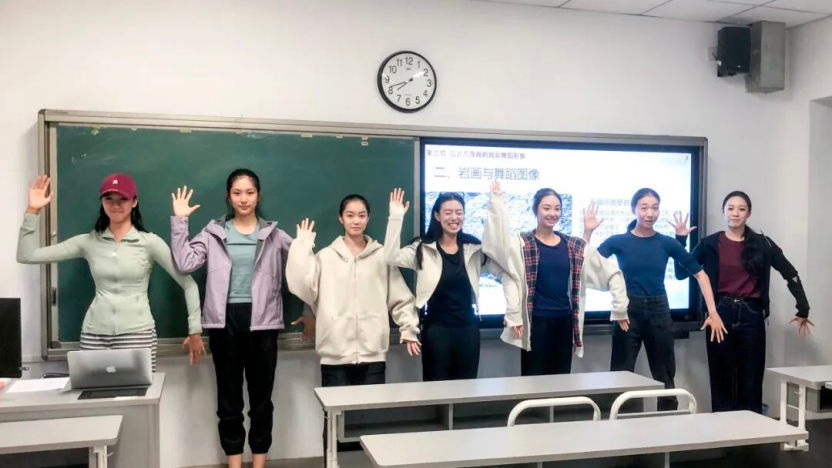
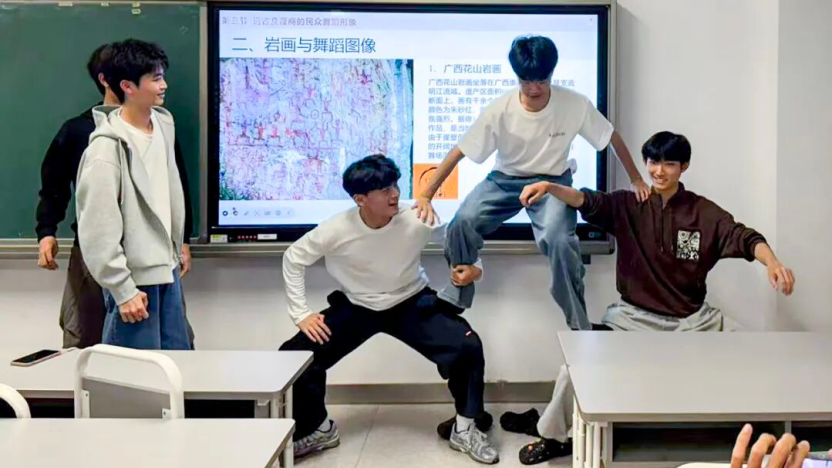
In the classroom, students discover dance movements preserved in historical artifacts
Transforming static cultural relics into fluid dance movements was far from easy. Throughout the creative process, students continuously encountered challenges brought by technology: AI-generated movements were often rigid and disconnected, making it difficult to match musical rhythms or accurately represent complex dance vocabulary. Through repeated adjustments, prompt refinement, and even starting over from scratch, students drew on their professional expertise in dance performance and gradually discovered new ways to collaborate with AI. Students Wang Yiran and Wang Yi’ang, from the Chinese Ethnic and Folk Dance program, drew inspiration from the forms and historical contexts of cultural relics to construct dance scenes imbued with storytelling elements. Zhang Xiaobei and Wang Haoran, majoring in ballet, explored how technology could convey the essence of art while experimenting with the integration of Chinese and Western dance elements. “I have come to realize that an important ability of an artist is to ‘translate’ their artistic ideas into instructions that AI can understand and execute,” said Wang Haoran. “This requires us first to develop a profound cultural understanding and a genuine embodied experience of dance.”
Ultimately, ten AI short films combining historical depth with innovative approaches emerged as outstanding works. Many students shared that the project allowed them to experience firsthand the profound cultural heritage behind dance while gaining a new way to explore and interpret dance through AI technology. More than just a course assignment, this practice represented an active exploration of dance history education in the digital age. Through this process, tradition was not confined to the past but given new life; technology was no longer merely a tool, but a medium infused with human creativity; and cultural inheritance gained renewed vitality through the imagination of young people.
Outstanding Work
The Cradle Calls: Awakening the Soul of Dance
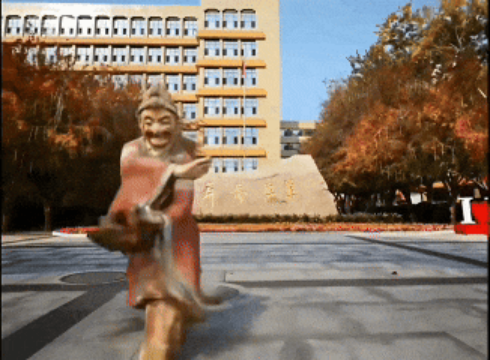
Prototype Cultural Relic
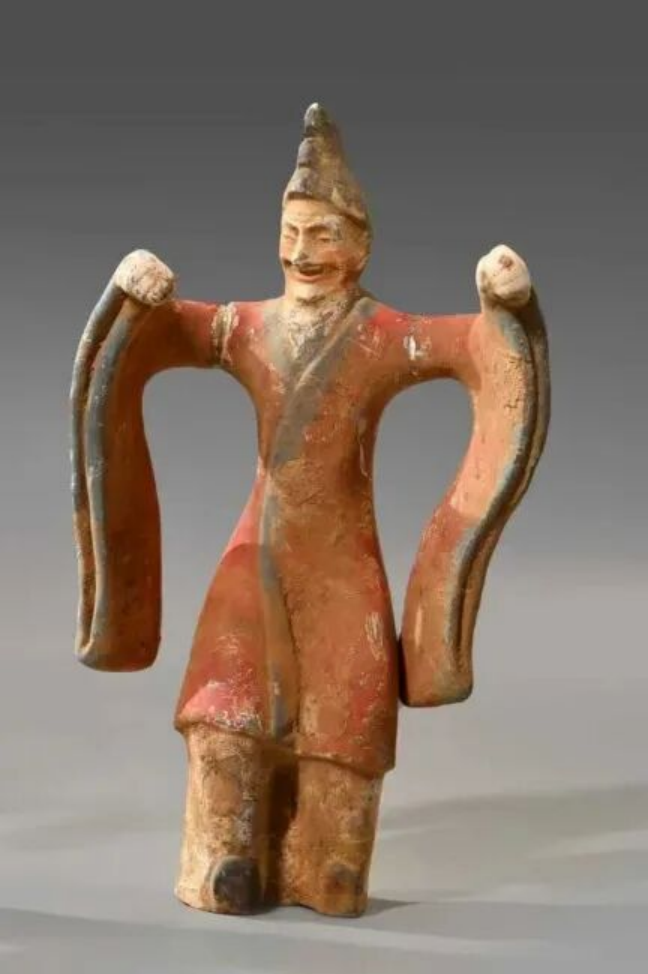
Northern and Southern Dynasties Period — Shaman Dance Figurine
Unearthed from the Kudi Huiluo Tomb of the Northern Qi Dynasty in Shouyang County, Taiyuan, Shanxi Province
With a joyful and spirited expression, the dance figurine raises both arms with clenched fists, its flowing sleeves resembling fluttering banners, while its legs are poised in a dynamic raised stance. The figurine vividly recreates a typical scene from the shamanic sacrificial rituals of northern nomadic peoples. In this short film, the dance figurine is placed before the Academy’s stone monument, which symbolizes the “Cradle of Dancers.” Through AI technology, the ancient figure is brought to life in graceful motion. The work not only offers a visual exploration of the ancient connection between shamanic rituals and the origins of dance, but also raises a profound question: “Where does the soul of dance come from?” Through this exploration, the work pays tribute to every soul of dance born from the “cradle” and destined to shine forever.
Created and performed by: Wang Haoran, Zhang Haoyang, Zhang Xi, Ye Zi, and Lin Wanxuan
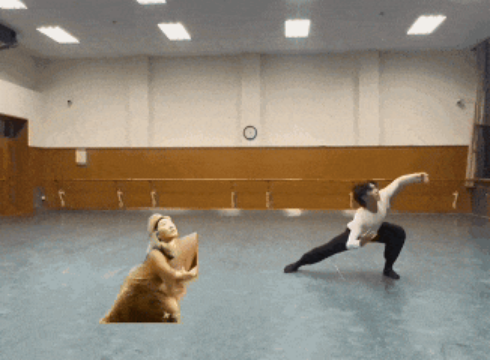
Across a Millennium: The Dance Figurine Awakens
Prototype Cultural Relic
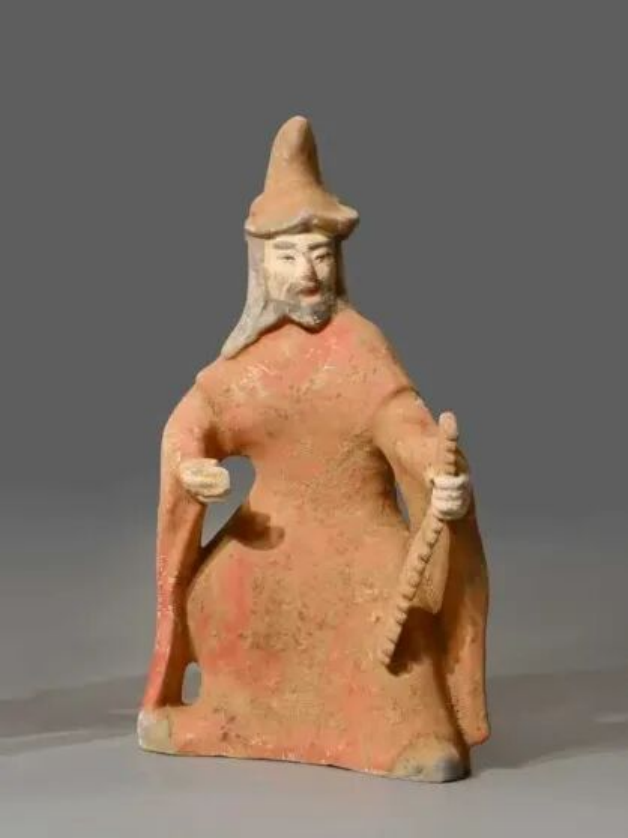
Northern and Southern Dynasties Period — Shaman Dance Figurine
Unearthed from the Tomb of Princess Ruru in Cixian County, Hebei Province
Holding a serrated ritual implement in its left hand, the dance figurine steps forward with its left leg, its body slightly inclined forward. With a gentle smile and a profound gaze, the figure embodies the nomadic peoples’ spiritual traditions and worldview of “communing with the divine through dance.” Through AI technology, this short film transports the thousand-year-old shaman figurine into a contemporary dance classroom, where it engages with BDA students in a cross-temporal encounter of teaching, dialogue, and shared dance. Through the interaction between teaching and learning, historical memories that have slumbered for millennia are quietly inherited and renewed.
Created and performed by: Wang Yi’ang, He Pinzhen, Cheng Chaoming, Yu Hongbo, and Lin Kunyuan
Lotus Reverie of the Tang Palace · A Celestial Dance by the Lotus Pond
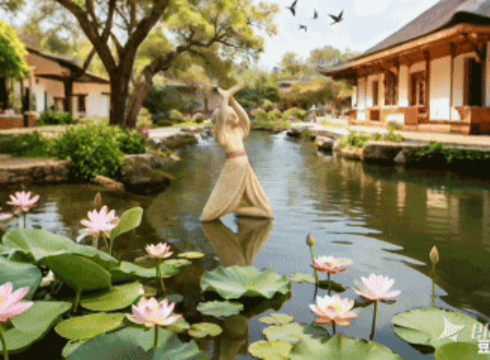
Prototype Cultural Relic
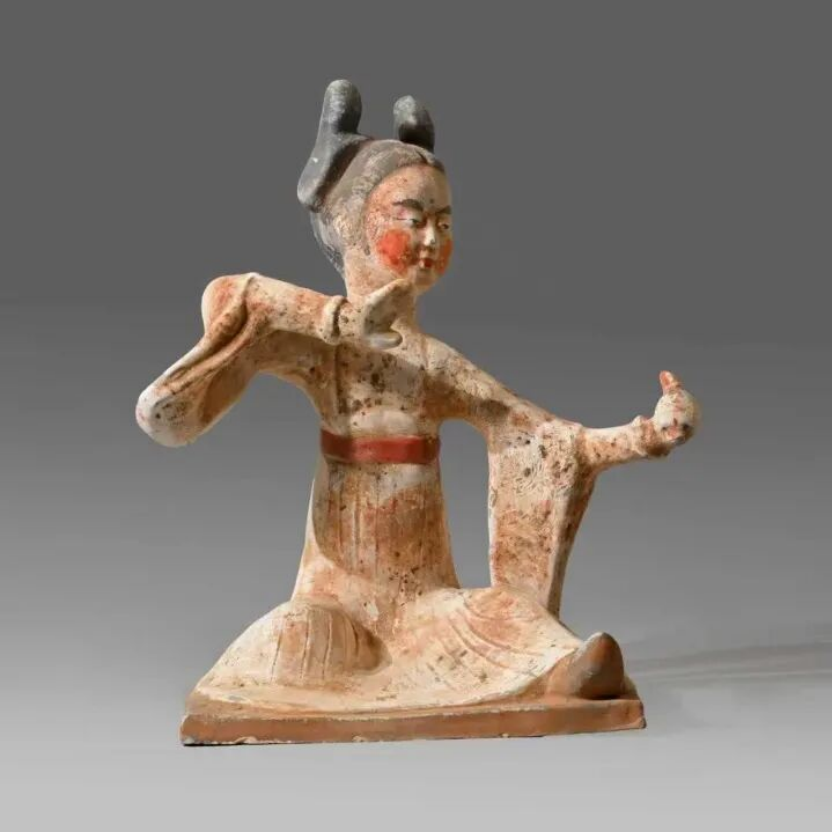
Tang Dynasty — Young Girl Dance Figurine
Unearthed in Luoyang, Henan Province, the original artifact is now lost overseas.
With a distinctive double-horn hairstyle, a short jacket with wide flowing sleeves, and a long pleated skirt, the figurine captures a graceful kneeling dance posture. Its delicate movements echo the Tang poem: “Lowering her body, jade pendants softly chime; raising her sleeves, silk robes gently sweep.” In this work, the dance figurine is placed amid the clear waters of a lotus pond and the shade of lush trees. Sleeves flutter with the breeze, and footsteps trace blooming lotus blossoms, while a tranquil courtyard and flowing streams create an elegant setting. Through the innocent yet devoted dance of a child, the work explores how art enriched life in the flourishing Tang Dynasty — nurturing refinement, joy, and spiritual fulfillment.
Created and performed by: Wang Yiran, Zhang Zimo, Zhang Keqin, Kong Lingyu, Wang Zihan, Li Shuxian, and Chen Shiyu
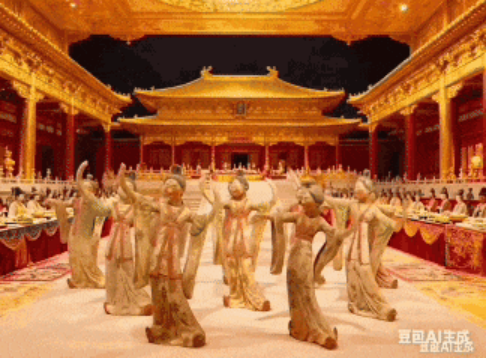
Golden Dome of Tang Shadows · A Silk Road Dance Reborn
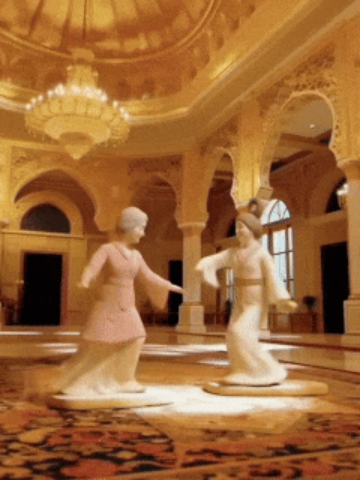
Prototype Cultural Relic
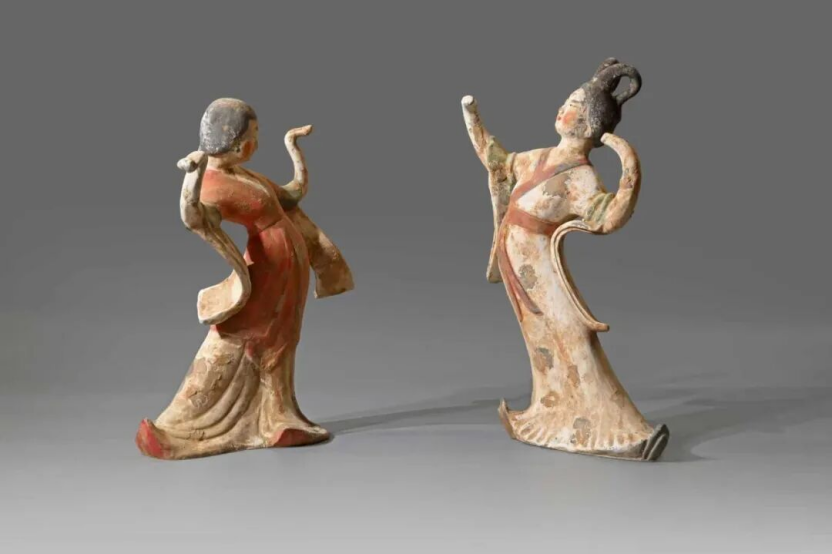
Tang Dynasty — Pair of Female Court Dancer Figurines with Raised Arms
The original artifacts are now lost overseas.
With the upper body gently arched backward and the waist elegantly twisted, the figurine raises both arms and extends its legs in opposite directions, creating a graceful and fluid posture. It vividly embodies the aesthetic qualities of the Tang Dynasty soft dance tradition (ruanwu), characterized by delicacy, fluidity, restraint, and refined elegance. In this short film, the dance figurine is placed within a Persian-style palace, where the flowing silk sleeves of Chang’an intertwine with Persian motifs, and Eastern melodies merge with the play of light and shadow from distant lands. Through the interplay of Tang Dynasty aesthetics, Persian music, and ballet movements, the work evokes a timeless dialogue among civilizations and celebrates the enduring connections that have linked cultures across the world.
Created and performed by: Yang Tianyu, Huang Huiqiao, Kang Danni, Liu Meicen, Lin Shiqi, and An Yaxin
The Dream of Tang Dynasty Figurines
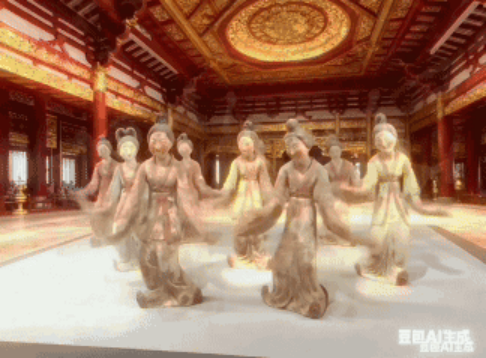
Prototype Cultural Relic
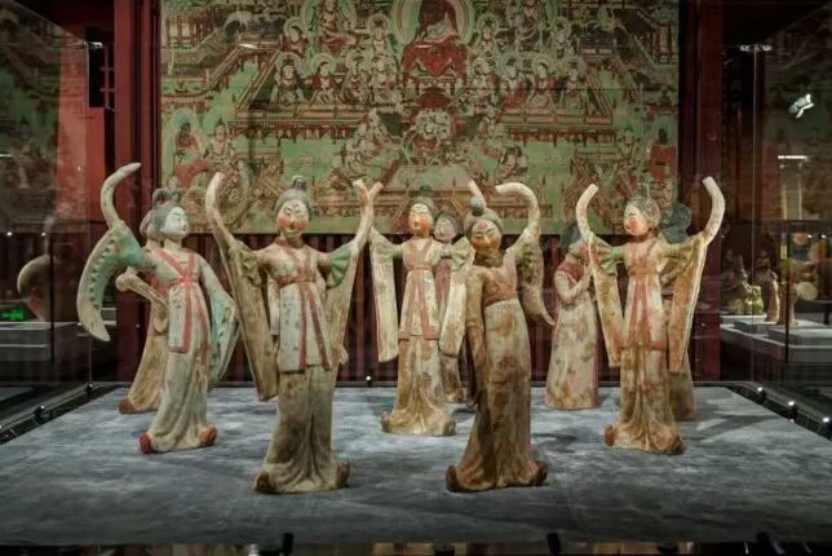
Tang Dynasty — Nishang Yuyi Dance (Dance of the Rainbow Skirt and Feathered Coat)
Unearthed in Luoyang, Henan Province; part of the original artifact has been lost or damaged.
With single or double hair buns, elegant attire, and graceful movements as the sleeves rise and fall, the figurine embodies a light and flowing dance posture. Its garments appear to move like drifting clouds and flowing water, creating a naturally harmonious artistic expression. The figurine vividly captures the ethereal and graceful aesthetic of the Tang Dynasty court dance “Nishang Yuyi” from the Kaiyuan era, while also serving as a visual testament to the remarkable flourishing of culture and art during the High Tang period. In this work, the dance figurine, once standing silently inside a museum display case, is placed within a virtual Tang Dynasty palace scene. As the melody of “Nishang Yuyi Music” unfolds, the figurine begins to dance gracefully — sleeves flowing like drifting clouds, skirts blooming like peony petals. Every lowered gaze and lifted sleeve reveals the elegance, vitality, and refined beauty of the prosperous Tang Dynasty.
Created and performed by: Zhang Boran, Shen Hongyu, Gan Yuze, Fang Zichen, and Fan Jinbao
Kumara
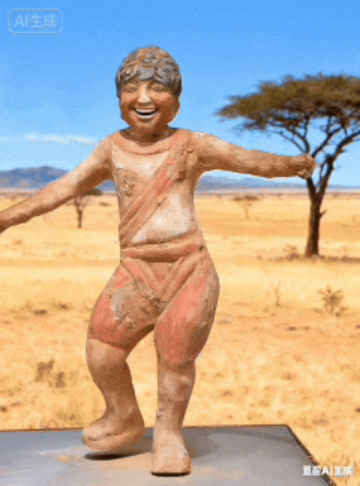
Prototype Cultural Relic
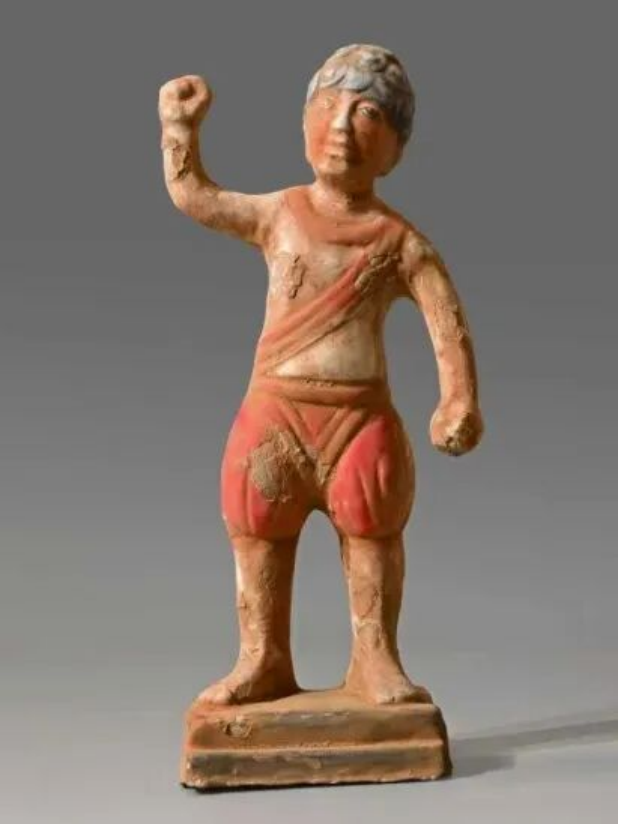
Tang Dynasty — Black Male Dancer Figurine
Unearthed in the Luoyang area, Henan Province; currently housed at the British Museum in London.
With curly hair, a bare upper body, a muscular physique, narrow trousers, and long socks, the dance figurine moves with steady strength and a distinct sense of rhythm as it raises its arms and steps forward. It vividly recreates the image of a performer from distant lands who traveled to Tang China along the Silk Road, serving as tangible evidence of the cosmopolitan character of the Tang capital and the vibrant cultural exchanges between China and the wider world during the flourishing Tang Dynasty. In this work, the Black dancer figurine from Chang’an is placed on the vast African grasslands, where it performs the Tibetan dance “Kumara.” Through this artistic journey across cultures, the work explores the theme of “breaking cultural boundaries and dancing together to the shared rhythm of humanity.”
Created and performed by: Wang Yifan, Lin Zeyu, Chen Weihan, and Zhang Desihan
Song and Dance Figures of the Grasslands
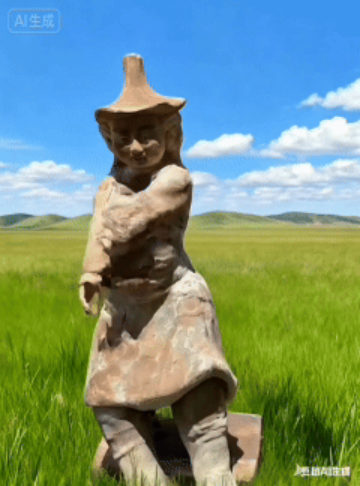
Prototype Cultural Relic
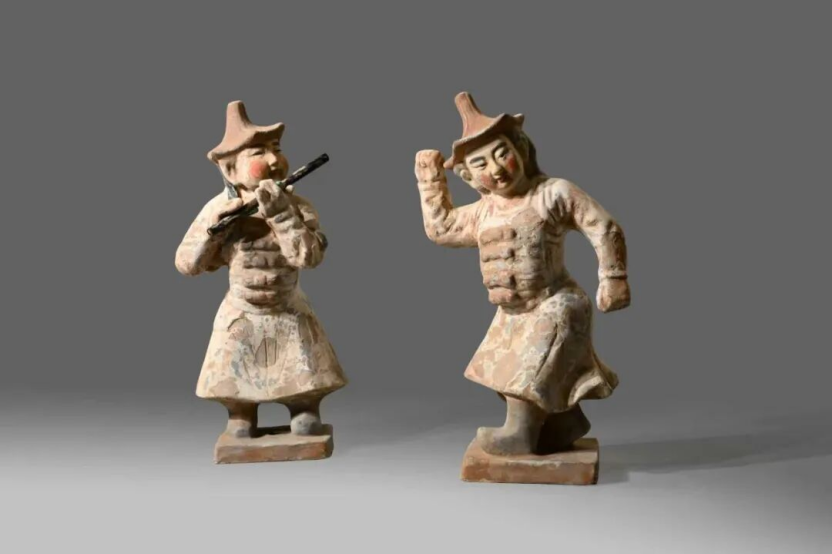
Yuan Dynasty — Mongolian Paired Music and Dance Figurines
Unearthed in Jiaozuo, Henan Province; currently housed at the Henan Museum
One figurine twists its waist, moves its arms, and dances with vigorous steps, while the other accompanies the performance with a flute, raising its toes lightly and displaying a lively expression. Their harmonious interaction vividly recreates the joyful scenes of ancient grassland music and dance, as well as the sincere emotions embedded in nomadic life. Drawing inspiration from the rhythms and movements of traditional Mongolian dance, this work recreates the lively atmosphere of the grasslands a thousand years ago, showcasing the enduring charm of music and dance deeply rooted in ethnic memories.
Created and performed by: Zhu Jiangxue, Peng Xirui, Tian Yihui, Zhang Ni, and Xie Yufei
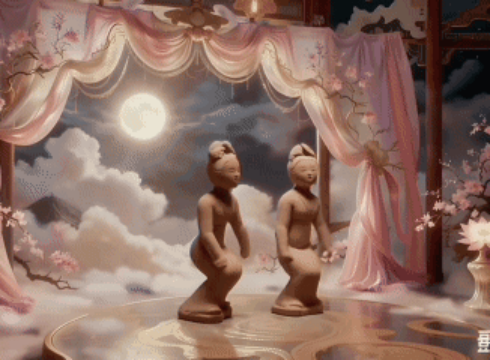
Dance in the Moonlight
Prototype Cultural Relic
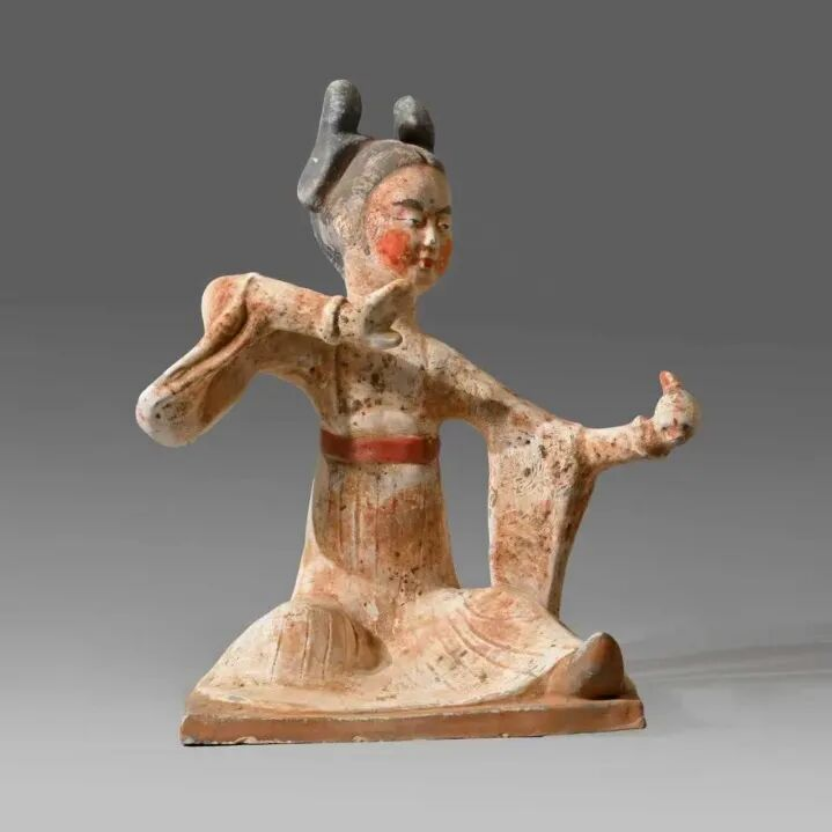
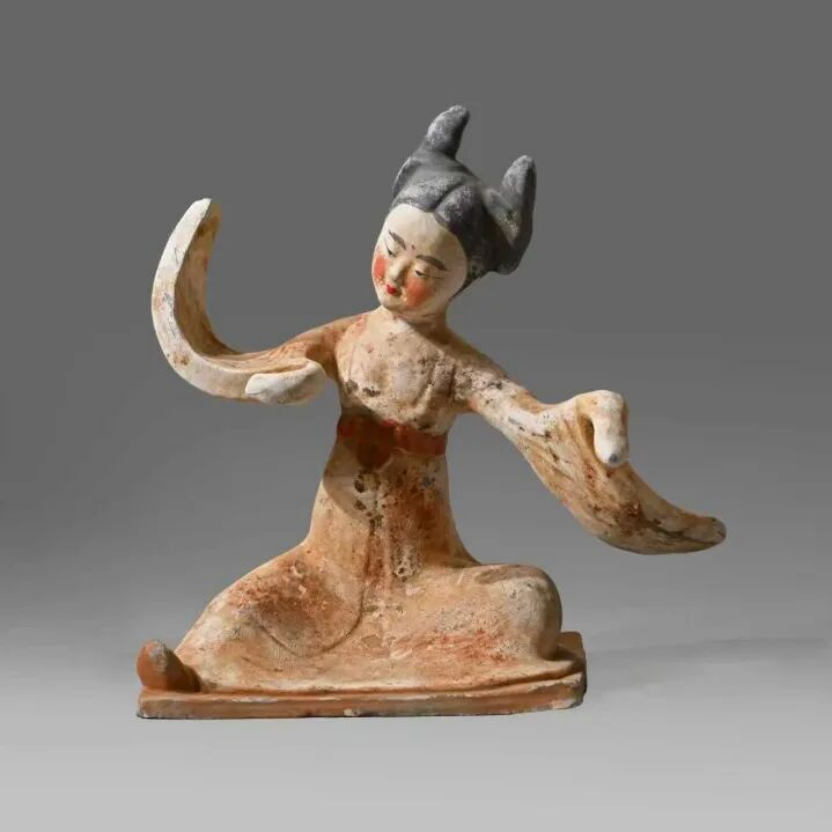
Tang Dynasty — Young Girl Dance Figurine
Unearthed in Luoyang, Henan Province; the original artifact is now lost overseas.
With a graceful and lively posture, the dance figurine moves with flowing sleeves that flutter like butterflies, rising and falling in elegant motion. In this work, a stage is created with peach branches as the backdrop and rippling moonlight as the scenery. Awakening after a thousand years of slumber, the dance figurine gracefully performs beneath drifting shadows — wide sleeves stirring falling blossoms, while delicate steps ripple the moonlit water. The interplay of light and movement creates a scene of breathtaking beauty.
Created and performed by: Zhao Jinxi, Yang Mingqi, Lu Jiayin, Li Yifan, Xu Ziqi, and An Yucheng
A Celestial Banquet Above the Clouds: A Thousand-Year Dance of Tang Figurines
Prototype Cultural Relic
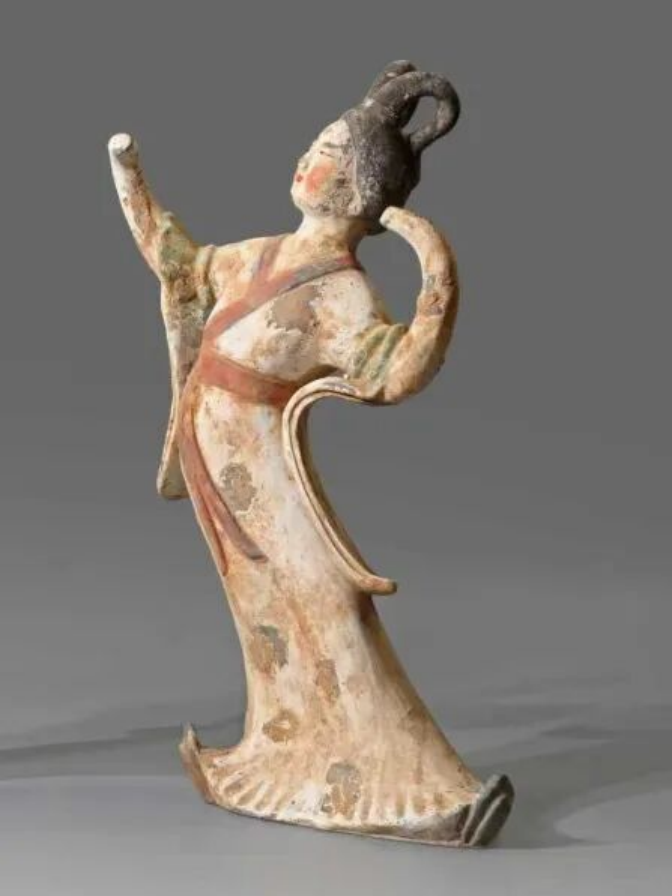
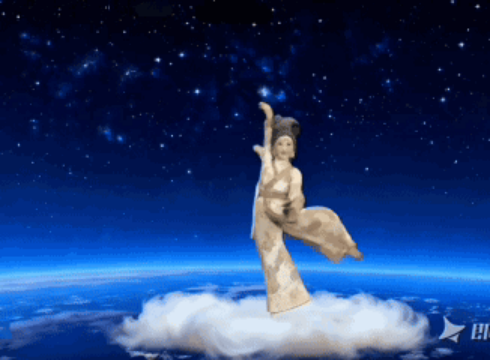
Tang Dynasty — Pair of Female Court Dancer Figurines with Raised Arms
The original artifacts are now lost overseas
Wearing wide-sleeved robes with right-side closures, the dance figurines are adorned with layered, curled lotus-leaf-shaped artificial sleeves. Their movements embody lightness, elegance, restraint, and serenity. In this work, the stage extends into a cosmic landscape of star-filled skies, drifting clouds, and the vast world below. The female figurine dances upon a celestial pathway, allowing the historical beauty of dance to resonate through the boundless universe and echo across eternity.
Created and performed by: Fu Junyi, Hou Xinran, Zhang Aiyao, Li Ruyi, Hu Yiyi, and Yang Fujia
Echoes of Tang Dance Across Civilizations
Prototype Cultural Relic
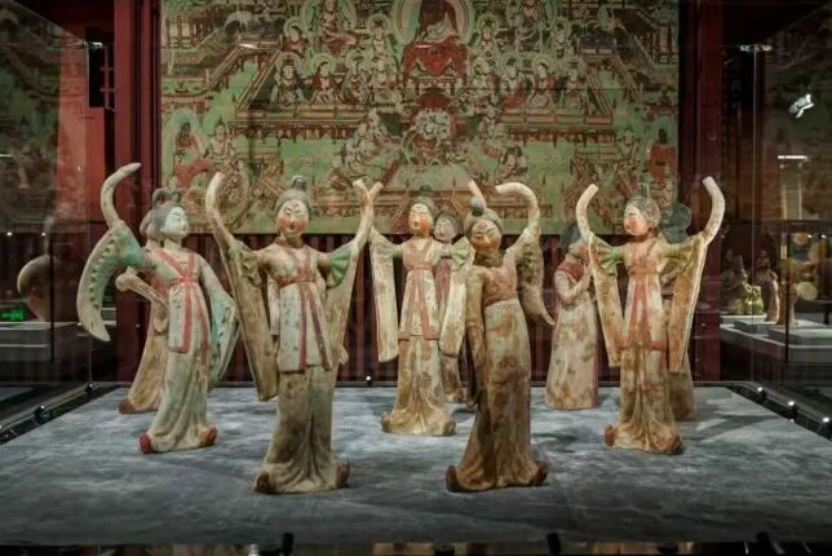
Tang Dynasty — Nishang Yuyi Dance (Dance of the Rainbow Skirt and Feathered Coat)
Unearthed in Luoyang, Henan Province; part of the original artifact has been lost
With single or double hair buns, a graceful appearance, and sleeves flowing like drifting clouds and water, the figurine embodies the elegant movements and harmonious artistic spirit of the “Nishang Yuyi” dance from the flourishing Tang Dynasty. Beginning its journey from the Tang imperial palace, the work carries the dance figurine to the ancient Roman Colosseum, where the flowing sleeves of Eastern dance unfold against the backdrop of Western classical architecture. This is not only a poetic imagining of cultural encounters along the Silk Road, but also an interpretation of the timeless qualities of Chinese culture — its openness, mobility, and spirit of dialogue with the world.
Created and performed by: Zhang Xiaobei, Liu Xingyu, Zheng Mingyu, Cui Jiayi, Wang Haolin, and Fu Ziying
Source: Official Website of Beijing Dance Academy, News Issue No. 1943 (Issue No. 15, 2026)
